Ready to plan the trip of a lifetime?
MAASAI MARA NATIONAL PARK

MAASAI MARA NATIONAL PARK
There is a moment, usually just as the morning mist lifts over the golden grass of the savanna, when the Maasai Mara take your breath away. A lions's roar echoes across the plain, thousands of hooves thunder in the distance, and the African sun paints the horizon in shades of fiery orange and soft violet.
If you have ever dreamed of a quintessential African safari, the Maasai Mara National Reserve isn't just a destination, it is the destination. Located in southwestern Kenya, seamlessly joining Tanzania's Serengeti, this world-renowned wildlife haven offers front-row seats to nature's greatest theatre.
Here is why the Maasai Mara deserves the top spot on your travel wish list.
1. The Great Migration: Nature's Greatest Spectacle
Between July and October, the Mara plays host to one of the natural world's most incredible marvels. Over 1.5 million wildebeest, zebras, and gazelles trek across hundreds of miles in search of fresh grazing grounds.
Watching herds brave crocodile-infested waters of the Mara River is raw, heart- pounding, and unforgettable. It is high-stakes drama at its finest.
2. Year-Round "Big Cat" Capital
You don't have to wait for the migration to experience the magic. Year-round, the Mara holds one of the highest concentrations of predators on the planet.
- Lions: Home to iconic, sprawling prides that reign over the open plains.
- Cheetahs: The flat, open terrain makes the Mara prime territory for watching the world's fastest land mammal in action.
- Leopards: Elusive and elegant, often spotted lounging in the branches of acacia trees along riverbanks.
3. Experiences That Go Beyond the Game Drive
A safari here isn't just about sitting in 4x4 safari cruiser. The Mara offers bucket-list experiences designed to create lifelong memories.
- Sunrise Hot Air Balloon Safaris: Drift silently above the plains at dawn as wildlife awakens below, landing to a glass of chilled champagne and a freshly prepared hot breakfast in the middle of the bush.
- Cultural Immersion with the Maasai: Learn ancient wilderness survival and tracking techniques from the Maasai people, whose rich heritage and vibrant red shukas (traditional blankets) are woven into the very identity of this land.
- Exclusive Conservancy Stays: Opt for private conservancies surrounding the main reserve for exclusive parks like guided bush walks, off-road game tracking, and thrilling night drives under starry skies.
Getting There: Easier Than You Think
Whether you prefer a scenic road trip or an effortless flight, getting to paradise is seamless:
- By Air (The Swift Route): A short, 45-minute flight from Narobi's Wilson Airport brings you directly to one of the Mara's bush airstrips. You'll be on a game drive before lunchtime
- By Road (The Scenic Route): A 5-to-6 hour drive from Nairobi takes you down the breathtaking Great Rift Valley escarpment, perfect for travellers who love soaking in local landscapes along the way. And yes, of course we will pick you up from any other location! :-)
When is the Best Time to Visit?
- July to October: Peak season for the Great Wildebeest Migration and dramatic river crossings.
- November to June: The "Secret Season." Expect lush greenery, vibrant birdlife, newborn animals, fewer crowds, and exceptional predator sightings at incredible value.
HELL'S GATE NATIONAL PARK

HELL'S GATE NATIOANAL PARK
Imagine trading the seat of a 4x4 safari vehicle for a bicycle, peddling along dirt trails lined with towering red cliffs, grazing zebras, and soaring eagles, with no metal doors or glass windows between you and the wild.
Hell's Gate National Park paired with the serene waters of Lake Naivasha. Located in the heart of the Great Rift Valley, this incredible duo offers a refreshing, hands-on contrast to the classic game drive.
Hell's Gate is one of the very few national parks in East Africa where visitors can walk, cycle or rock-climb alongside wild animals. Named for a narrow break in it's imposing cliffs, the park features volcanic scenery that feels straight out of a movie set.
- Bicycle Safaris: Rent a mountain bike at the gate and ride past herds of zebras, gazelles, giraffes and warthogs. Because large predators are rarely seen here, it is safe to explore the open plains on two wheels.
- Towering Volcanic Plugs: Marvel at Fischer's Tower and Central Tower, giant basalt pillars that dominate the skyline and serve as popular challenge spots for guided rock climbing.
- The Dramatic Ol Njorowa Gorge: Hike down into water-carved canyons where natural hot springs bubble through the rock floor and geothermal steam rises from the cliff walls.
- Hollywood Inquiries: The dramatic landscapes of Hell's Gate famously served as the real-world visual inspiration for the scenery in Disney's The Lion King.
Lake Naivasha: Peaceful Waters & Walking with Giraffes
Just minutes from the park entrance, Lake Naivasha, a high-attitude freshwater lake, offers a tranquil oasis after an active morning.
- Boat Safaris & Hippo Spotting: Board a traditional motorboat to cruise past floating papyrus swamps, massive pods of submerged hippos, and hundreds of bird species, including the striking African fish eagle.
- Crescent Island Game Sanctuary: Accessible by boat, this private sanctuary is a quiet haven where you can enjoy a guided walking safari. With no predators on the island, you can stroll mere yards away from wildebeests, waterbucks, and giraffes grazing peacefully.
Best Time to Visit
- Year-Round Escape: The Great Rift Valley enjoys mild, pleasant weather all year.
- Dry Months (June - October & January - March): The best conditions for cycling, gorge hiking, and rock climbing, as trails remain clear and firm.
LAKE NAKURU NATIONAL PARK

LAKE NAKURU NATIONAL PARK
Imagine standing atop a cliff overlooking a sparkling soda lake, surrounded by acacia woodlands and green hills, watching white rhinos graze peacefully on the shores below.
Lake Nakuru National Park is one of Kenya's most compact yet action-packed wildlife destinations.Famous for its vibrant birdlife, sanctuary status for endangered species, and dramatic Rift Valley scenery, Lake Nakuru offers a safari experience like no other.
Here is why this shimmering park deserves a starring role in your Kenyan itinerary.
1. A World-Famous Rhino Sanctuary
Lake Nakuru is one of Kenya's greatest conservation success stories. Fenced specifically to protect rare wildlife, the park serves as a premier sanctuary for both Black and White Rhinoceroses.
- Guaranteed Sightings: Unlike many vast reserves where rhinos can be elusive, Lake Nakuru offers some of the highest probabilities in East Africa of spotting this prehistoric giants in the wild.
2. A Birdwatcher's Paradise.
While changing water levels mean the legendary "pink blanket" of flamingos shifts between Rift Valley lakes, Lake Nakuru remains a flourishing haven for over 400 bird species.
- Waterbird Haven: Watch lesser and greater flamingos, massive white pelicans, cormorants, and fish eagles feeding along the lake's edge.
3. Rich Big Game Sightings
Despite its compact size, the park packs an incredible density of wildlife:
- Rothschild's Giraffes: The park is a major sanctuary for this rare endangered giraffe subspecies.
- Predator Action: Keep your camera ready for lions lounging in the trees and leopards resting in the dense fever tree forests.
- Large Mammals: Herds of Cape buffalo, waterbucks, zebra, and impala roam the open lake margins.
4. Breathtaking Scenic Viewpoints
Lake Nakuru isn't just about wildlife; its landscapes are spectacular.
- Baboon Cliff & Out of Africa Lookout: Drive up to high elevation points offering sweeping panoramic views across the lake, surrounding forests, and distant Rift Valley wall, the ultimate spot for photos and sunset drinks.
BEST TIMES TO VISIT:
- Dry Seasons (June to October & January to February): Peak Game Viewing, thinner foliage and shorter grass make spotting rhinos and elusive big cats much easier.
- The Green & Rainy Seasons (March to May & November) Birdwatching and Solitude: March - May ("Long Rains") & November ("Short Rains") the park turns into a lush, emerald paradise.
AMBOSELI NATIONAL PARK

AMBOSELI NATIONAL PARK
When people think of Amboseli National Park, the image that instantly comes to mind is iconic; a majestic herd of elephants strolling across a dusty plain with the snow-capped peak of Mount Kilimanjaro towering in the background.
While those legendary elephant encounters and mountain views are reasons enough to visit, it has way more to offer. From lush freshwater swamps teeming with hippos to ancient volcanic lookouts, vibrant birdlife, and rich cultural heritage.
ATTRACTIONS:
1. THE CROWN JEWEL: WORLD-FAMOUS ELEPHANT HERDS
Amboseli isn't just a home to elephants, it is one of the best places on Earth to observe them up close.
- The World's Most Studied Herds: Thanks to over 50 years of continuous research by the Amboseli Elephant Research Project, these elephants are remarkably calm around vehicles.
- Witness "Super Tuskers": Amboseli remains one of the rare sanctuaries where older bull elephants carry tusks so large they nearly touch the dust.
- Swamp Gatherings: Watching dozens of mothers and claves plunge into the Enkongo Narok and Ol Okenya swamps to feed and splash in the cool water is a daily highlight.
2. THE GREATEST BACKDROP: MOUNT KILIMANJARO
Rising just across the border in Tanzania, Mount Kilimanjaro, Africa's highest peak provides a dramatic backdrop to every game drive.
- Dawn and Dusk Views: Because the mountain often hides behind mid-day clubs, early morning sunrise game drives offer the clearest, most breathtaking views as the snow summit glows in morning light.
- A Photographers Dream: Photographers travel from all over the world to frame giraffes, zebras, and lions against the snowy backdrop of Kilimanjaro.
3. Diverse Wildlife Beyond the Giants
While elephants take center stage, Amboseli supports over 80 mammal species roaming across open savanna, acacia woodlands, and dry lakebeds:
- Predators: Lions, cheetahs, spotted hyenas, and jackals roam the open plains in search of prey.
- Plains Game: Large numbers of Masai giraffes, cape buffaloes, zebras, wildebeests, impalas, and gazelles thrive throughout the ecosystem.
- Swamp Dwellers: Pods of hippos share the freshwater marshes with waterbucks and pelicans.
4. PANORAMIC VIEWS FROM OBSERVATION HILL
Unlike many parts where visitors must stay inside vehicles, Amboseli features Observation Hill (Ol Doinyo Orok)
- 360-Degree Lookout: A short, paved walking path leads to the top of this volcanic hill, giving travellers a sweeping view of the entire park.
- Aerial Wildlife Tracking: From the top, look down through a binoculars to see elephants navigating the green marshes, herds crossing the dry lakebed, and Kilimanjaro dominating the skyline.
5. A HAVEN FOR BIRDWATCHERS
With over 420 recorded bird species, Amboseli is a paradise for bird enthusiasts:
- Swamp & Waterbirds: Spot African fish eagles, kingfishers, pelicans, crowned cranes, and flamingoes near the water sources.
- Raptors & Savannah Species: Look out for secretary birds walking teh planes, kori bustards, and colourful hornbills in the acacia trees.
- Migratory Birds: Visit between November and April, when migratory birds arrive from Europe and Asia, filling the wetlands with life and color.
7. EXPERIENTIAL SAFARI ACTIVITIES
Amboseli offers immersive activities that allow clients to experience the wild in different ways:
- Hot Air Ballon Safaris: Float silently over the savanna at dawn as the light touches Kilimanjaro, finishing with a champagne bush breakfast.
- Guided Bush Walks: In private conservancies bordering the main park, traveler's can head out on foot with experienced Maasai guides to track wildlife and learn traditional plant lore.
- Maasai Cultural Visits: Experience authentic cultural exchanges with local Maasai communities, gaining insight into their traditional nomadic lifestyle, warrior dances, and beadwork.
WHEN TO TRAVEL:
- Dry Seasons (June-October & January-February): Ideal for wildlife viewing around the swamps and clear mountain views.
- Green Seasons (November & March-May): Lush scenery, brilliant birdwatching, lower crowds, and great rates.
SAMBURU NATIONAL PARK

SAMBURU NATIONAL PARK
If you are looking for an authentic, off-the-beaten-path African adventure, step across the Equator into Kenya's rugged northern frontier. Here, surrounded by red dust, acacia trees, and dramatic basalt mountains, lies Samburu National Reserve.
Uncrowded, visually striking, and teeming with rare species found nowhere else in the country, Samburu offers a wild contrast to southern Kenya's classic open savannas.
Here is why Samburu National Reserve belongs at the top of your wish list.
1. Home of the "Samburu Special Five"
While south Kenya boasts the Big Five, Samburu is famous for its own exclusive group of unique, drought-adapted endemic species known as the Samburu Special Five
- Gerenuk: The famous "giraffe-antelope" that balances on its hind legs to reach high acacia leaves
- Reticulated Giraffe: Instantly recognisable by its striking, geometric grid-like coat pattern.
- Grevy's Zebra: The world's largest and most endangered zebra, featuring large rounded ears and thin, closely spaced stripes.
- Beisa Oryx: A striking desert antelope with long, spear-like horns and bold face markings.
- Somali Ostrich: Famous for the distinct cobalt-blue color on the neck and legs of the males.
2. The Lifeline: Eweso Ng'iro River
Running through the heart of the dry reserve is the Ewaso Ng'iro River ("River of Brown Water"). Lined with doum palms and riverine forests, this permanent water source serves as a magnet for wildlife:
- Large herds of elephants crossing the river waters and splashing along sandy banks.
- High concentrations of big cats, including lions, cheetahs, and some of the best leopard sightings in East Africa.
- Nilte crocodiles basking on the river banks alongside hippos submerged in the pools.
3. Culture & Exclusive Experiences
- Authentic Samburu Culture: Engage with the semi-nomadic Samburu people, relatives of the Maasai, renowned for their vibrant beaded jewellery, traditional songs, and rich pastoral heritage.
- Camel Safaris & Walking Trails: Explore the wilderness quiet on foot or atop a camel with expert local Samburu Trackers leading the way.
- Fewer Crowds: Enjoy private, uninterrupted game drives without the safari vehicle queues seen in busier parks.
WHEN TO VISIT:
- June - October (Peak Dry Season): Best for high-density wildlife viewing. Animals gather along the Eweso Ng'iro River, and dry foliage makes tracking big cats and the "Samburu Special Five" effortless.
- January - February (Shoulder Dry Season): Hot weather and clear skies with great riverfront action, offering high-quality game drives with fewer crowds.
- March - May & November (Green/Rainy Seasons): Ideal for photographers, birdwatchers (over 450 species), and budget travellers seeking lower lodge rates and quiet trails.
TSAVO EAST AND WEST NATIOANL PARK
TSAVO EAST AND WEST NATIONAL PARK
Combined, Tsavo East and Tsavo West National Parks form one of the largest protected wilderness areas on Earth, covering nearly 22,000 square kilometres of wild, unfiltered African savanna.
Divided by the main highway and railway connecting Nairobi to the Kenyan coast, these twin parks offer two remarkably distinct safari experiences in a single destination.
A Shared Heritage: The Legend of Tsavo
Beyond their stunning landscapes, both parks are rich in history and wildlife:
- The Big Five & Predators: Both parks host lions, leopards, cheetahs, buffaloes, and vast herds of giraffes, zebras, and impalas.
- The "Man-Eaters of Tsavo": History buffs will recognise Tsavo as the setting for the famous 1898 story of the two man-eating lions that halted the construction of the Kenya-Uganda Railway.
- Incredible Birdwatching: Over 500 bird species inhabit the ecosystem, including migratory species arriving between October and April.
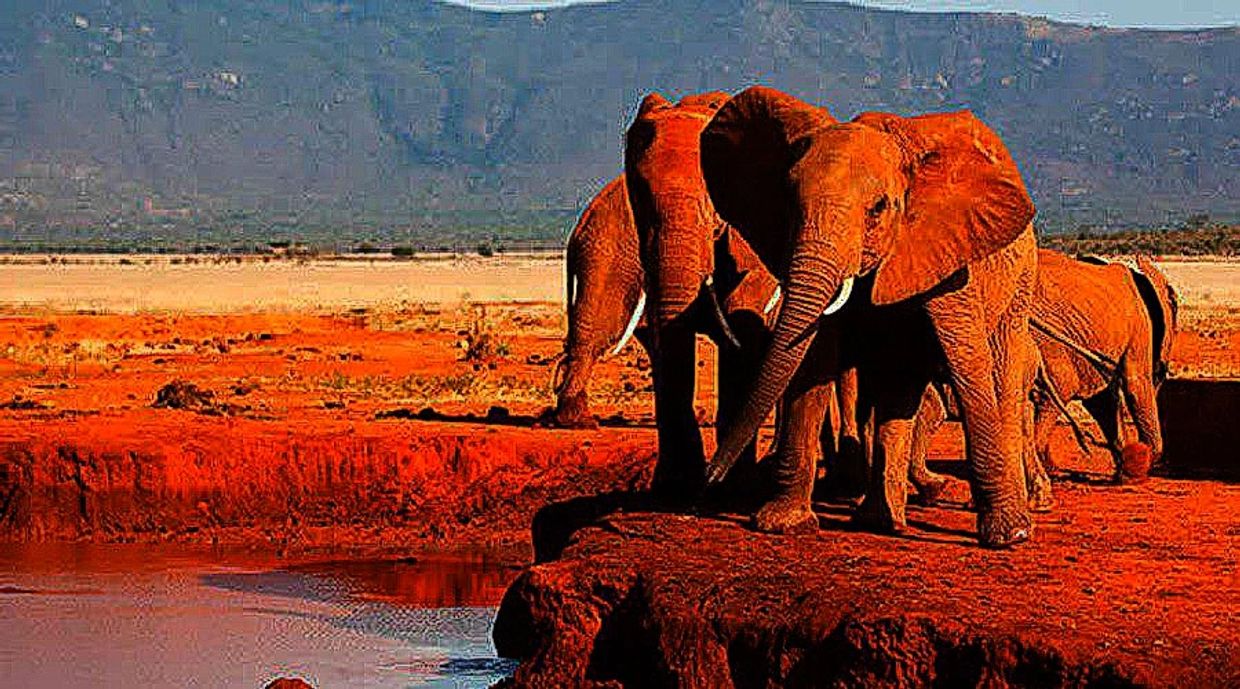
From the famous "Dust-Red Elephants" roaming vast open plains to crystal-clear natural springs, ancient lava flows, and legendary history, here is everything Tsavo has to offer for an unforgettable safari adventure.
TSAVO EAST NATIONAL PARK: The Theatre of the Wild
Tsavo East is larger, flatter, and characterised by vast, open savanna plains, dry scrubland, and iconic red soil. It delivers that raw, classic wilderness feel where the horizon seems to stretch on forever.
1. The Famous "Dust-Red" Elephants
Tsavo East is world-renowned for its massive elephant herds. The park's soil is rich in reddish iron oxide; when elephants bathe in the red mud and dust themselves to protect against the sun, their skin takes on a striking, fiery red color found nowhere else.
2. Yatta Plateau
Stretching over 290 kilometres, the Yatta Plateau is the world's longest ancient flow. Formed by cooling basalt lava millions of years ago, this massive ridge dominates the park's western sky and serves as a major migratory corridor for birds and wildlife.
3. Lugard Falls & Crocodile Point
Located along the Galana River, Lugard Falls is a striking series of white-water rapids carved into multi-colored rock formations. Just downstream, lies the Crocodile Point, a natural riverbank gathering spot where huge Nile Crocodiles and hippos bask in the sun.
4. Mudanda Rock
This massive, 1.6-kilometer natural rock outcrop acts as a giant rainwater catchment. At its base lies a natural dam that attracts hundreds of elephants, buffaloes, and plains game during dry afternoons, making it an extraordinary vantage point for photographers.
TSAVO WEST NATIONAL PARK; The Land of Lava, Springs and Rhinos
In contrast to the flat open plains of the East, Tsavo West features a dramatic, varied landscape of rolling green hills, volcanic cones, dense acacia forests, ad subterranean river springs.
1. Mzima Springs
A true oasis in the desert, Mzima springs gushes fifty million gallons of crystal-clear water every day, filtered naturally through the underground volcanic rocks of the nearby Chyulu Hills.
- The Underwater Viewing Hide: Visitors can walk down into a submerged glass hut to watch hippos, Nile crocodiles, and schools of fish swimming in crystal-clear water.
- Lush Riverine Forest: The surrounding palms and fever trees are home to vervet monkeys, Sykes' monkeys, and rich birdlife.
2. Shetani Lava Flow
"Shetani" means "Devil" in Swahili, a name given by local communities who witnessed black lava spewing from the earth just a few hundred years ago. Today, this massive field of jagged, jet-black folded lava rock a surreal, lunar-like landscape that travellers can explore on foot.
3. Ngulia Rhino Sanctuary
Nestled at the base of the dramatic Ngulia Hills, this 90-square-kilometer fenced sanctuary was established to rescue Tsavo's black rhino population. it provides a safe haven where visitors have a high chance of spotting elusive, endangered black rhinos in their natural habitat.
4. Lake Jipe & Chaimu Crater
- Lake Jipe: Straddling the border with Tanzania, this peaceful lake offers boat safaris to spot hippos, waterbirds, and elephants coming down to drink.
- Chaimu Crater: A vivid black black cinder cone where active travellers can take a guided hike up the steep rim for sweeping panoramic views across the volcanic plains.
Best Time To Visit:
- June to October & January to February (Dry Seasons): Best for game viewing, the vegetation thins out, and animals gather around Mzima Springs, the Galana River, and watering holes.
- November & March to May (Green Seasons): Lush green landscapes, excellent birding, baby animals, and fear crowds, ideal for photographic safaris.
OL PEJETA CONSERVANCY
OL PEJETA CONSERVANCY
Tucked into the shadow of Mount Kenya in Laikipia County, Ol Pejeta Conservancy is one of East Africa's most groundbreaking and versatile safari destinations. Spannig 90,000 acres of open savanna, acacia woodlands, and riverine forests, this non-profit conservancy blends high-density wildlife viewing with world-leading conservation initiatives.
Whether you are looking for Big Five game drives, hands-on conservation experiences, or family-friendly adventures, Ol Pejeta delivers an intimate experience that goes far beyond a traditional safari.
Here is why Ol Pejeta should be on your wish list.
1. The East African Rhino Capital: It is world-famous as the largest black-rhino sanctuary in East Africa. Across sweeping planes, over 140 black rhinos and dozens of white rhinos roam freely alongside herds of elephants, cape buffaloes, and big cats.
- The Last of Their Kind: Ol Pejeta is home to Najin and Fat, the world's last two remaining Northern White Rhinos. Visiting this remarkable gentle giants is a moving experience you won't fond anywhere else on Earth.
- Meet Baraka: Guests can also stop by to meet Baraka, a blind black rhino who serves as a beloved ambassador for his species, offering you a rare opportunity to see a black rhino up close.
2. Kenya's Only Chimpanzee Sanctuary
Tucked along the banks of the Eweso Nyiro River lies the Sweetwaters Chimpanzee Sanctuary which provides a lifelong home to over 30 orphaned and rescued chimpanzees from around the world.
Strolling through the sanctuary lookout points allows you to watch these intelligent primates play, forage, and socialise in large, natural enclosures, making it a highlight for travellers of all ages.
3. Big Five Game Drives with a Mount Kenya Backdrop
Beyondi ts sanctuaries Ol Pejeta offers classic Big Five wildlife viewing against the dramatic skyline of Mount Kenya.
- The Big Cats: Lions, leopards, and cheetahs thrive across the open grasslands, alongside spotted hyenas and elusive African wild dogs.
- Northern Special Species: Keep your eyes peeled for unique northern Kenya species, including the endangered Grevy's zebra and Jackson's hartebeest.
4. Adventure Beyond the 4x4
What truly sets Ol Pejeta apart is the sheer variety of ways to explore the wild:
- Night Game Drives: Embark on a dark-sky expedition equipped with spotlights to search for elusive nocturnal creatures like servals, aardvarks, caracals, and hunting lion prides.
- Lion Tracking: Join conservation researches in tracking collared lions using telemetry equipment, contributing directly to wildlife monitoring data.
- Anti-Poaching K9 Encounters: Meet the conservancy's specialised Belgian Malinois anti-poaching dog unit and watch interactive demonstrations of their tracking skills.
- Bush Walks & Horseback Safaris: Experience the African bush on foot or horseback alongside expert local guides.
Best Time to Visit
- June to October & January to February (Dry Seasons): Clear skies, comfortable weather, and sparse foliage make spotting wildlife around water sources effortless.
- November & March to May (Green Seasons): Emerald green landscapes, bay animals, incredible birdwatching (over 300 species), and quiet safari tracks.